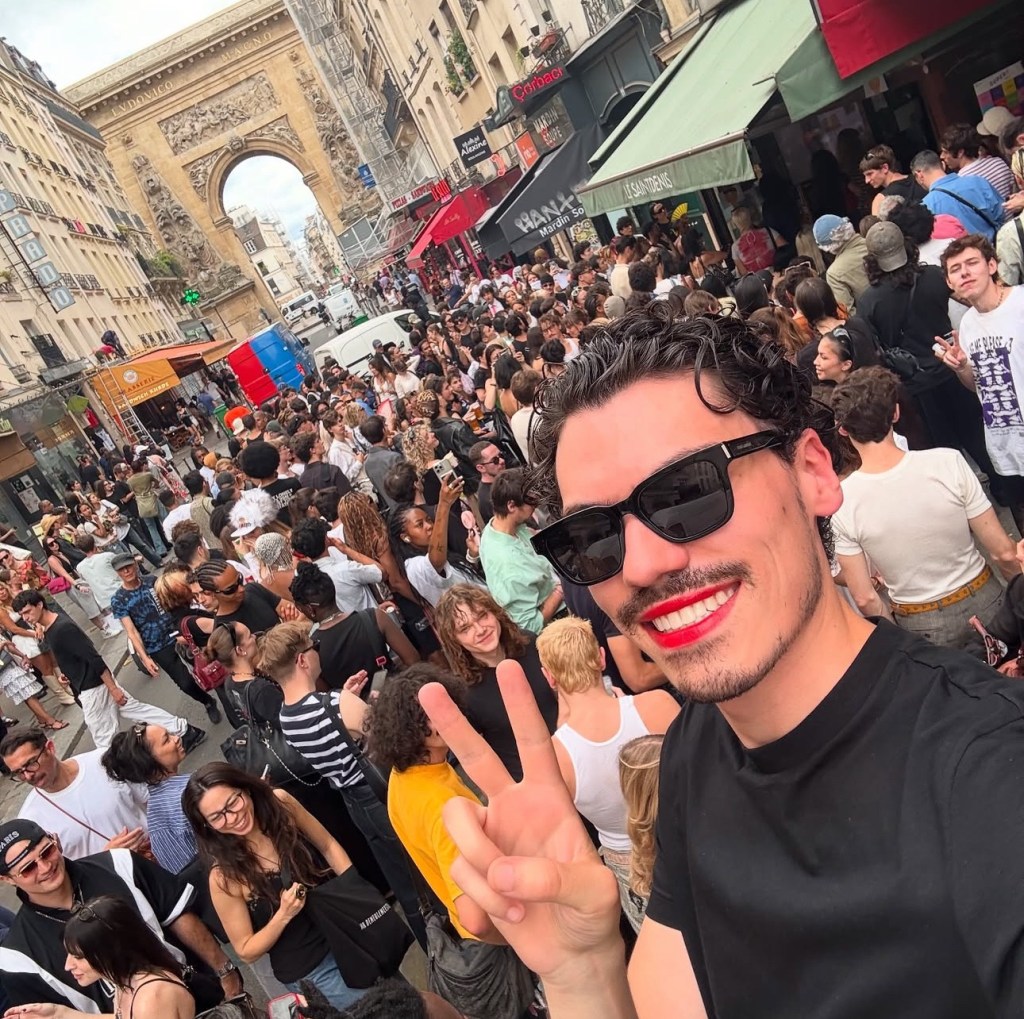

This past Paris Fashion Week marked a pivotal moment not only on the runways, but in the way the fashion community rallies around them. One particularly talked-about incident involved fashion personality Lyas(@ly.as), who was notably not invited to the Dior show under the house’s new creative director, Jonathan Anderson.

Rather than quietly sit it out, Lyas turned to TikTok and Instagram to meet-up and livestream the show at a Parisian cafe, watching along with fellow fashion lovers and reacting in real time. What could have been a moment of exclusion became a moment of communal celebration.
Anyone who follows fashion knows that invitations to the major shows—Dior, Chanel, Balenciaga—are guarded with the kind of reverence usually reserved for elite sporting events. Attending in person is the equivalent of being courtside at the World Cup final. But in turning the show into a shared livestream experience, Lyas made the case that fashion lovers don’t have to sit on the sidelines just because they weren’t physically in the room.
And maybe this is the beginning of something more. Over the past few years, livestreams have become a staple of fashion week, a response to both the digital age and pandemic-era necessity. But what’s emerging now is a new kind of viewing culture—one that mirrors how people gather to watch major football games or awards shows. There’s joy in spectating together, whether with friends or strangers. Watching a collection unfold live, discussing it as it happens, and feeling the collective gasp at a breathtaking look creates a sense of global community. It’s the language of fashion and art being spoken across time zones.
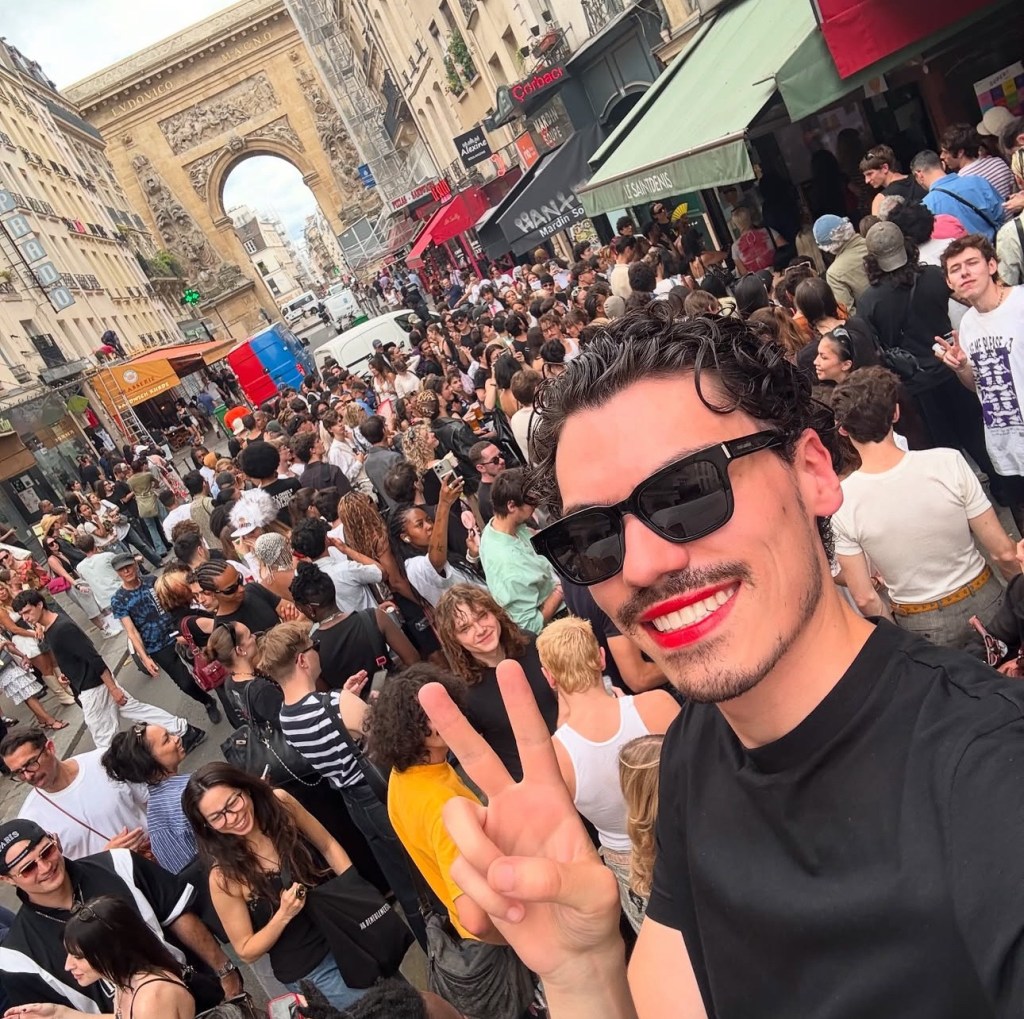
This communal livestreaming might just be the next evolution in how fashion is consumed. As technology continues to advance—through virtual reality, 3D experiences, and digital showrooms—the idea of needing an invite becomes increasingly symbolic rather than practical. You may not be physically at the show, but with the right interface, the emotion and immediacy of the front row can still be yours.
Lyas’s moment wasn’t just about missing a seat at Dior. It was about redefining what it means to be present in fashion. He turned the digital space into a runway of its own—where commentary, emotion, and connection are just as valuable as a glossy paper invite. In doing so, he reminded us that while the industry may still love exclusivity, the future of fashion is increasingly about access, connection, and shared experience.
But is this new wave of digital front-row fandom a good thing or a bad thing?
On one hand, it’s undeniably positive. Fashion is no longer gatekept behind velvet ropes. Livestreaming and digital commentary allow anyone, anywhere in the world, to be part of a cultural moment as it unfolds. It creates space for more voices, more interpretations, and more diverse appreciation of fashion as art. It transforms fashion week from a closed circuit into a global event—more inclusive, more democratic, more alive.

On the other hand, part of the magic of attending a fashion show in person is precisely its exclusivity. Being invited is an honour—an acknowledgment of one’s place within the inner circle of influence, taste, or contribution. There’s a ceremonial quality to receiving an embossed invite, finding your seat, and watching the collection from a few feet away. When everyone has access, does some of that magic fade? Does fashion lose a bit of its mystique?
Perhaps the answer isn’t clear-cut. What we’re witnessing is not the death of exclusivity, but the rise of parallel experiences. The physical front row and the digital front row are beginning to coexist—one offering prestige and intimacy, the other offering access and community. And maybe that’s the future of fashion: layered, multifaceted, and open to interpretation.
Because whether you’re sitting at the show or watching from a meet up at a cafe with strangers, what unites us all is the love of the craft, the story, and the spectacle. And maybe that’s the most fashionable thing of all.
What do you think?
 styleexplorermagazine.com
Leave a comment