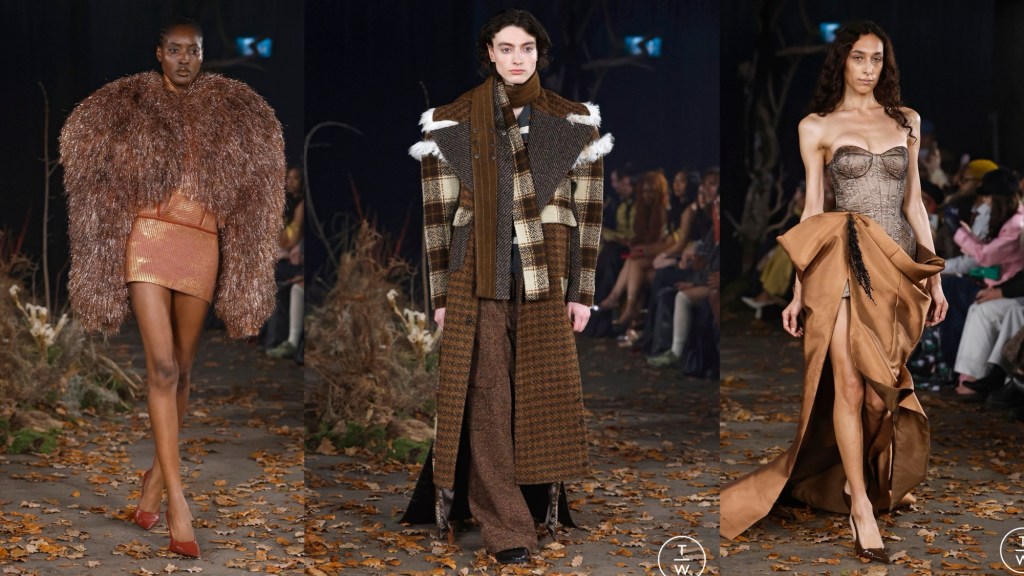

At London fashion week, where emerging voices often redefine the language of contemporary fashion, AGRO studio presented The Wanderer an autumn/winter 2026 collection staged at Village Underground in Shoreditch. Set against the industrial backdrop of east London, the show unfolded less as a conventional runway presentation and more as a narrative experience, positioning clothing as a vehicle for storytelling, identity and psychological exploration. The collection’s title alone suggested motion, a figure suspended between destinations, belonging neither fully in the past nor the present.
Founded by designers George Oxby and Angus Cockram, AGRO studio reflects the spirit of London fashion – a landscape celebrated for its experimental energy and cultural diversity, where emotional storytelling often takes place over conventional notions of polish and commercial appeal. The partnership itself reflects contemporary creative culture. The duo famously met through a dating app before evolving into collaborators, transforming a personal connection into a shared artistic vision. This origin story feels fitting for a brand preoccupied with encounters, journeys and transformation. Much like their own beginnings, the wanderer explores how identities are shaped through movement and unexpected intersections.
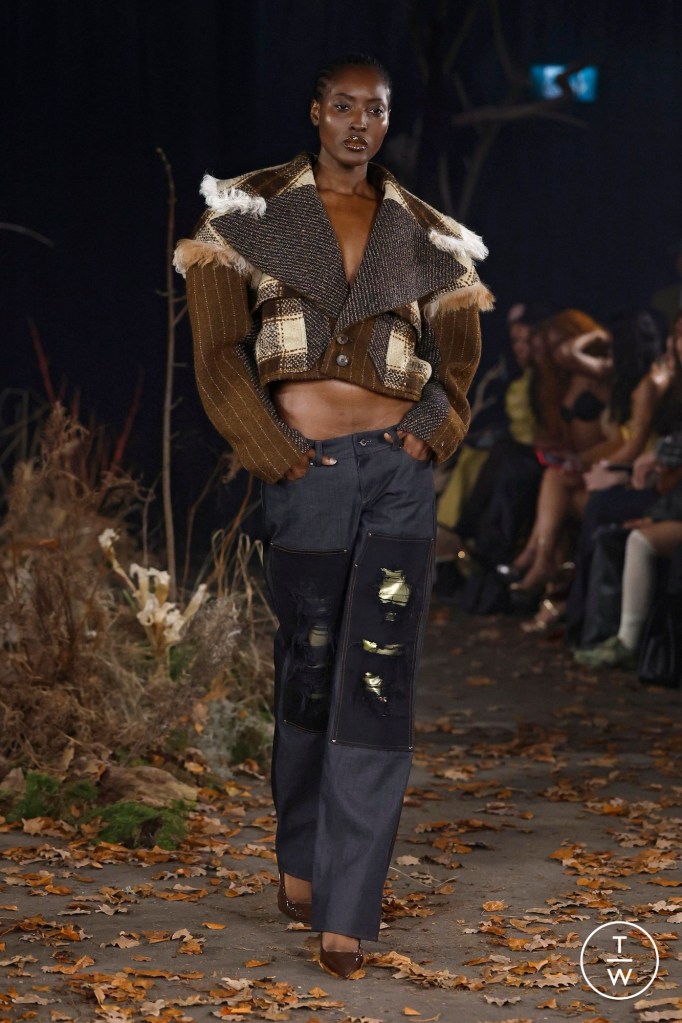
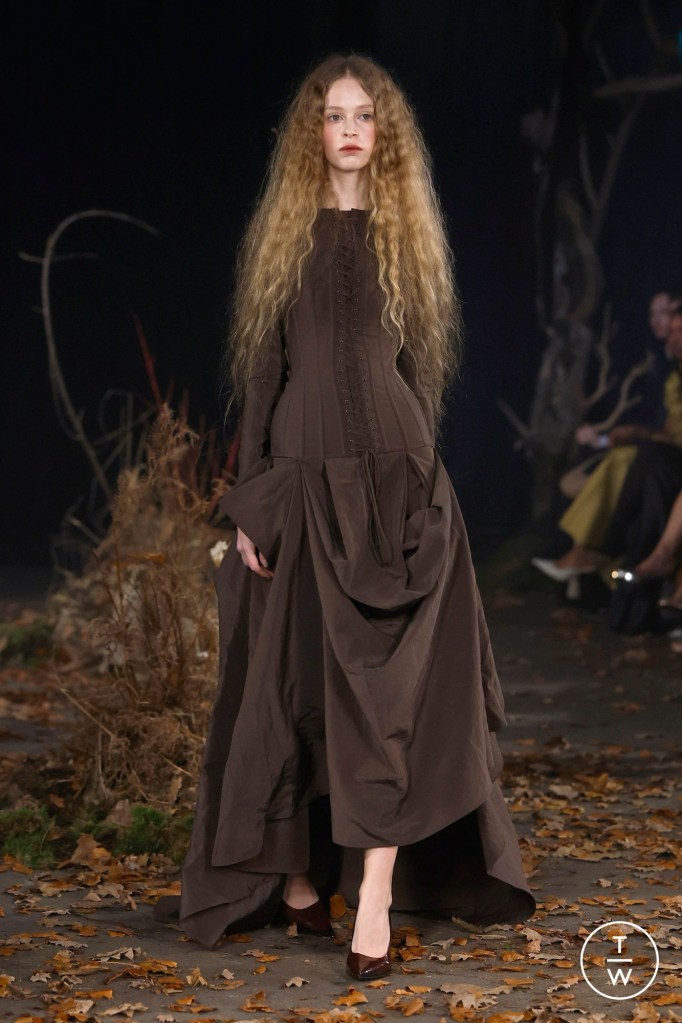
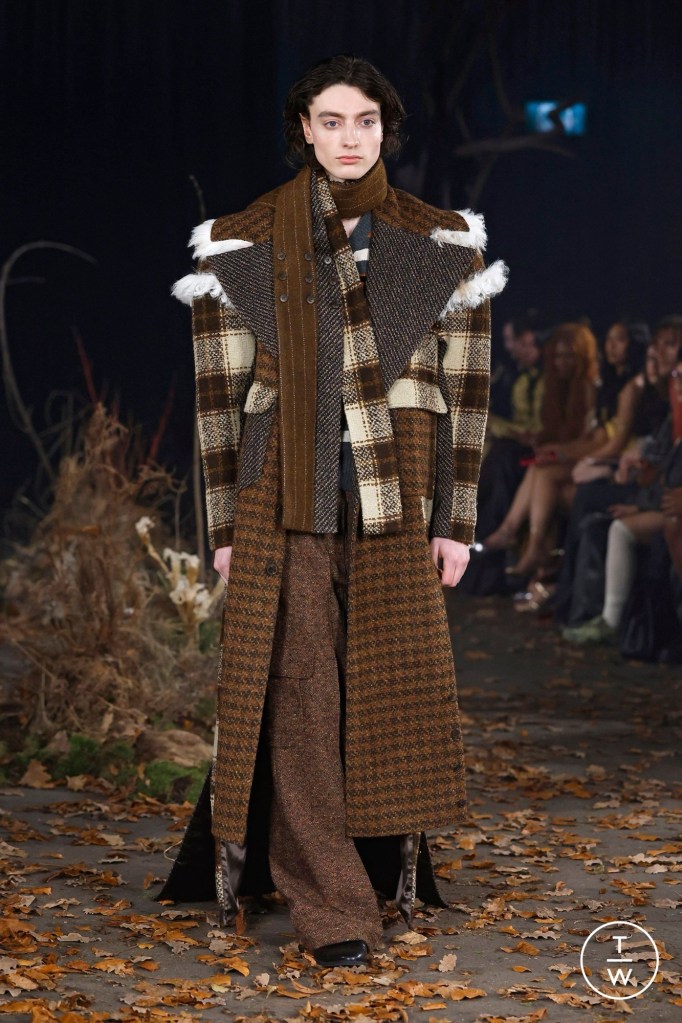
The collection unfolded as a procession of characters emerging from an imagined woodland landscape, the runway scattered with fallen leaves that reinforced the sense of seasonal transition and quiet decay. Opening looks established a grounded, almost monastic mood. A flowing brown dress with elegance, setting the tone for a collection rooted in earthiness and contemplation. Tailored outwear followed, coats layered over textured knitwear and checked fabrics, introducing AGRO studio’s recurring dialogue between protection and vulnerability.
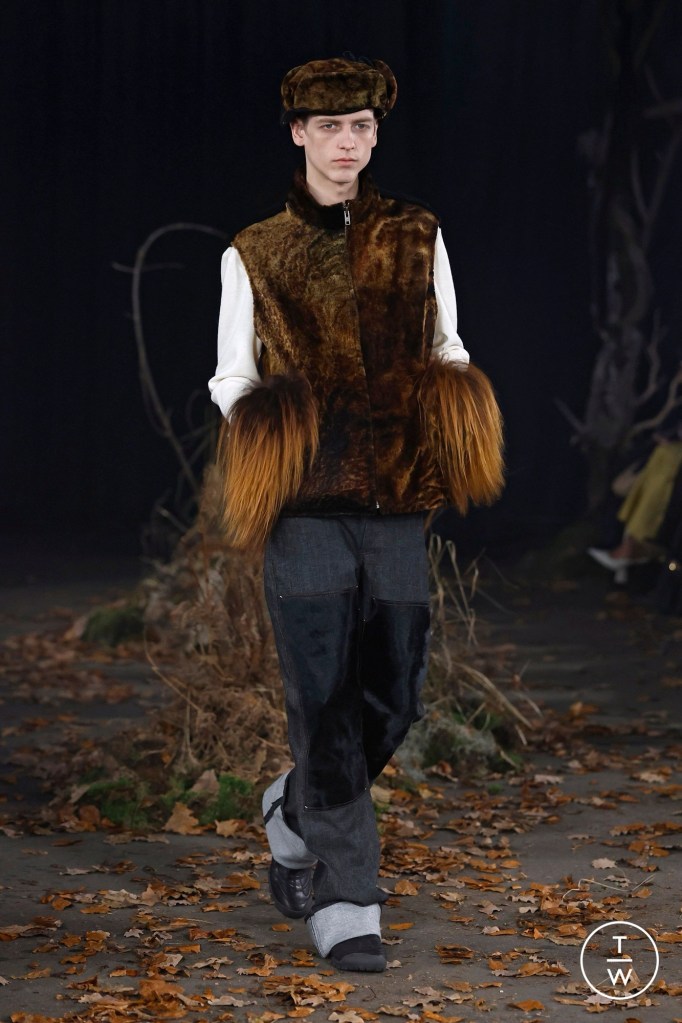
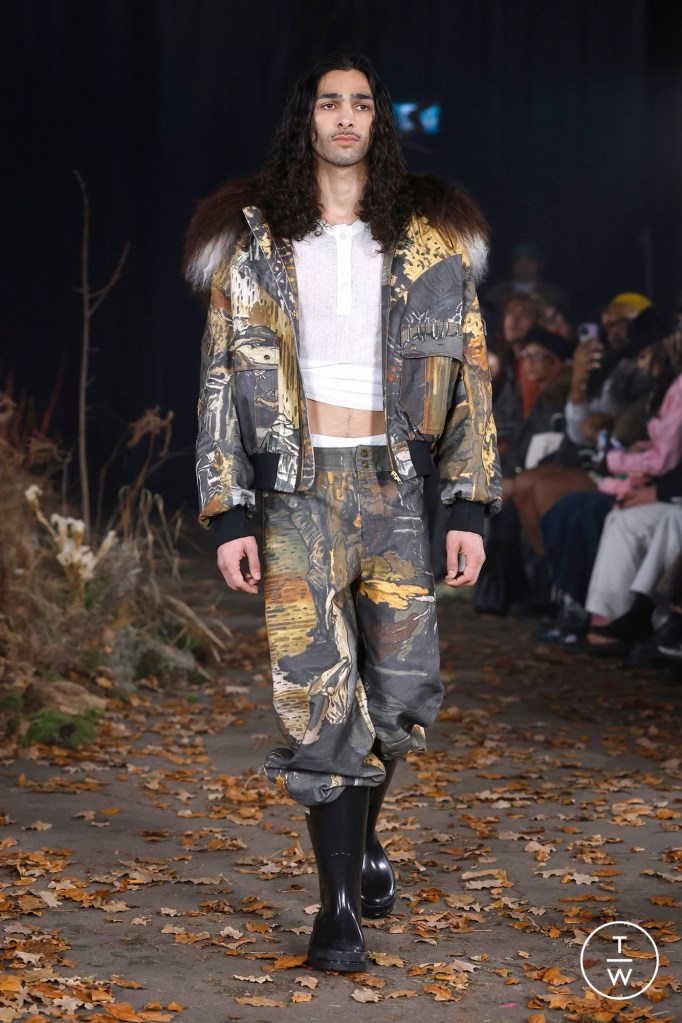
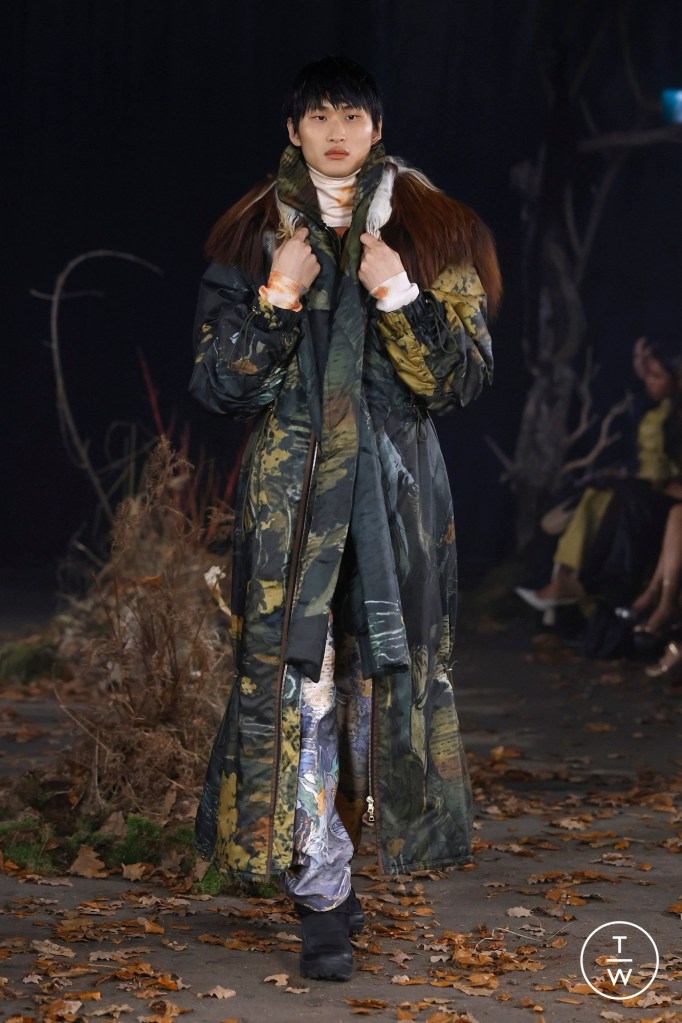
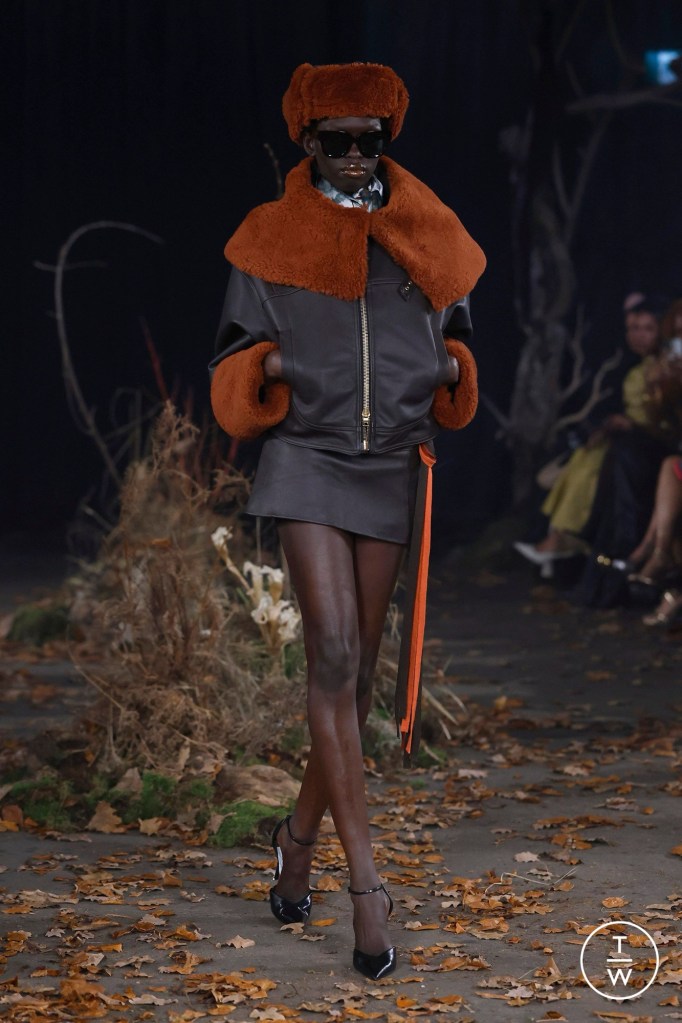
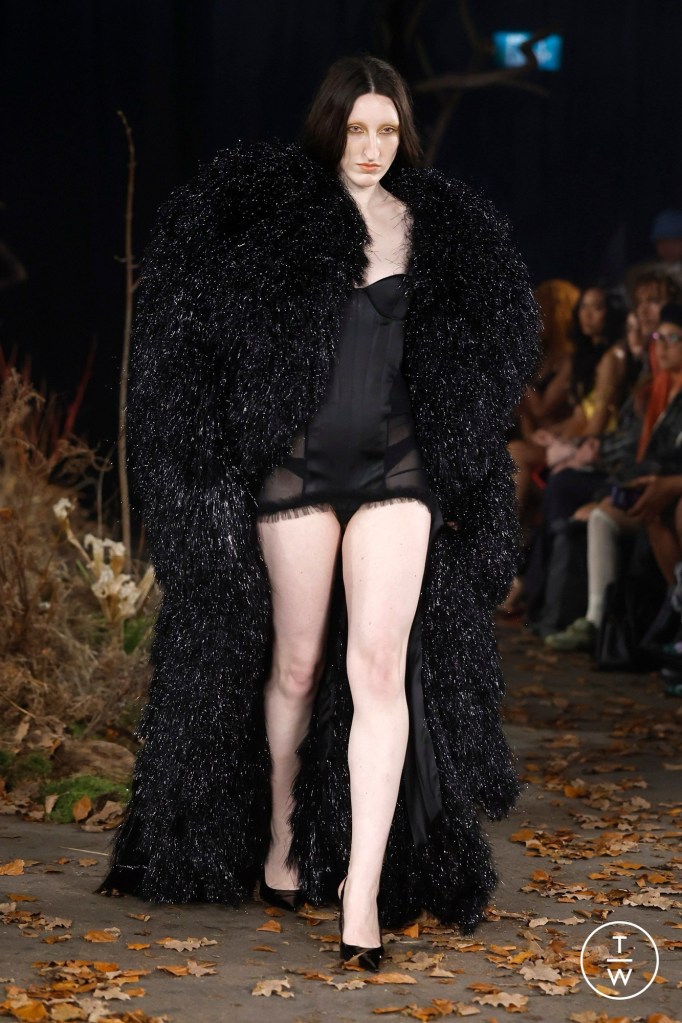
Outwear quickly emerged as the emotional foundation of the collection. Oversized shearling collars, patchwork leathers and fur trimmed silhouettes wrapped around the body in layers that suggested protection against both environment and experience. Yet the fur did more than shield. The way it was worn, often exaggerated in scale and carried with deliberate confidence, transforming protection into power. These garments did not conceal the wearer. They amplified presence, turning survival into strength. Aviator inspired structures and weighted layering reinforced this idea.
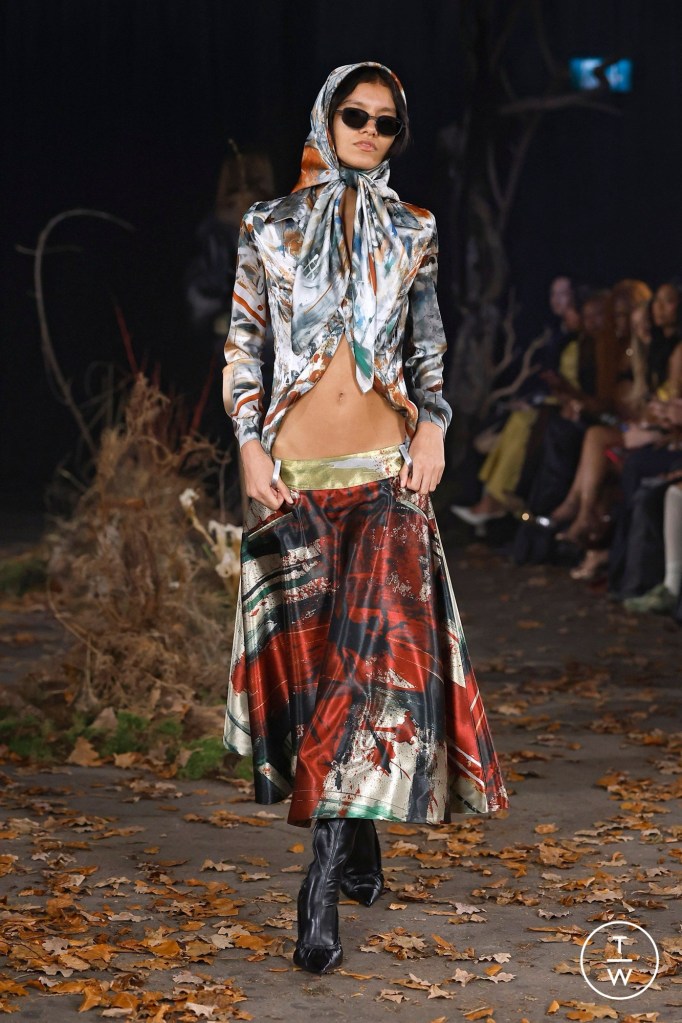
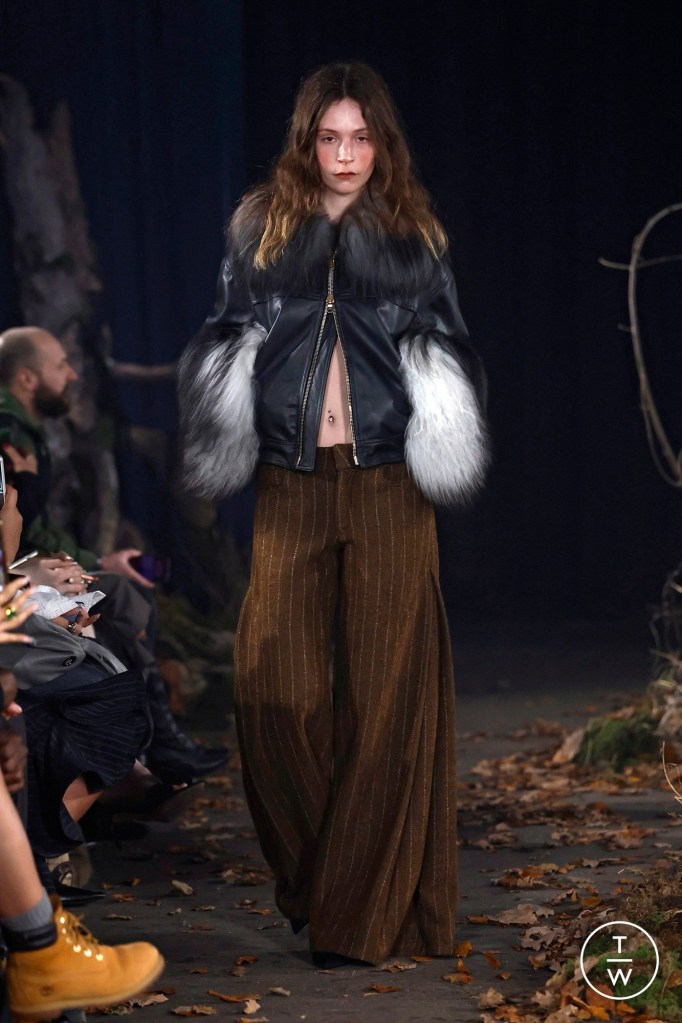
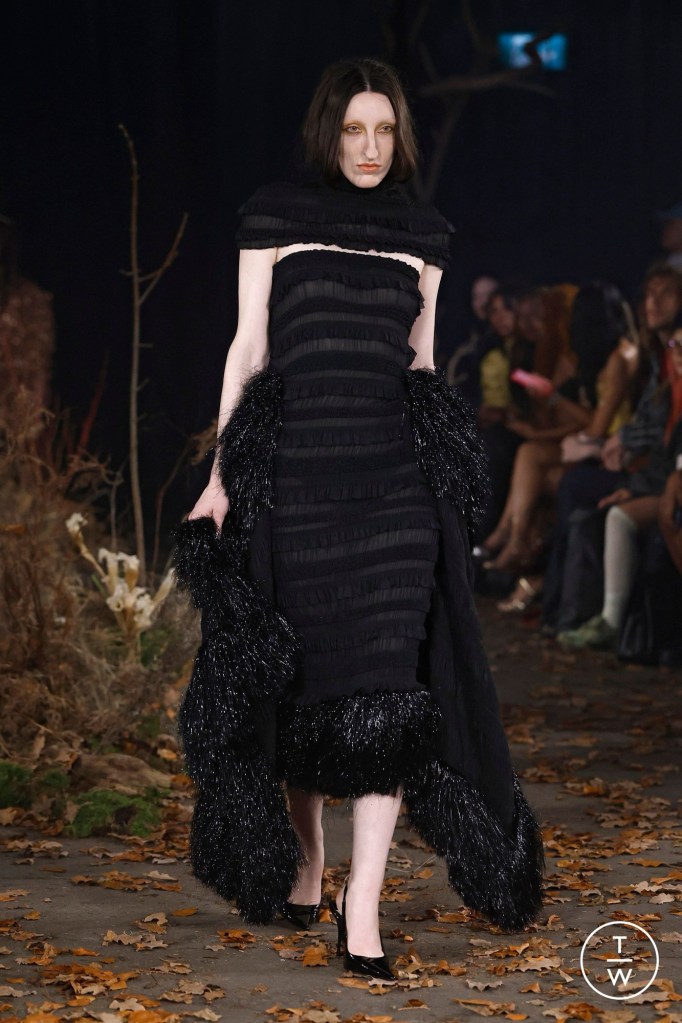
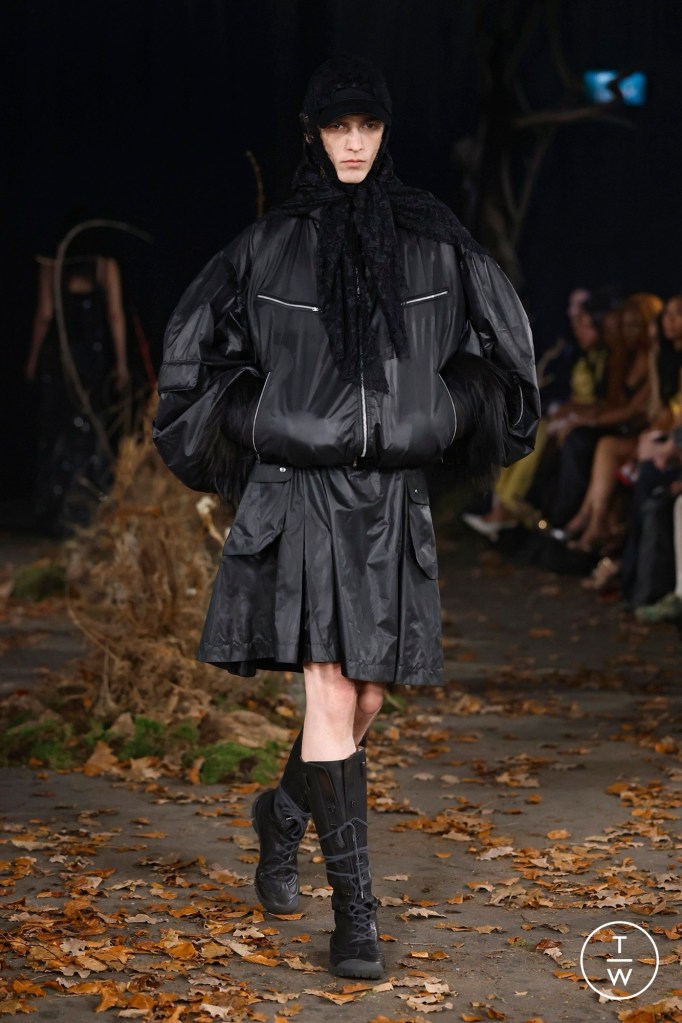
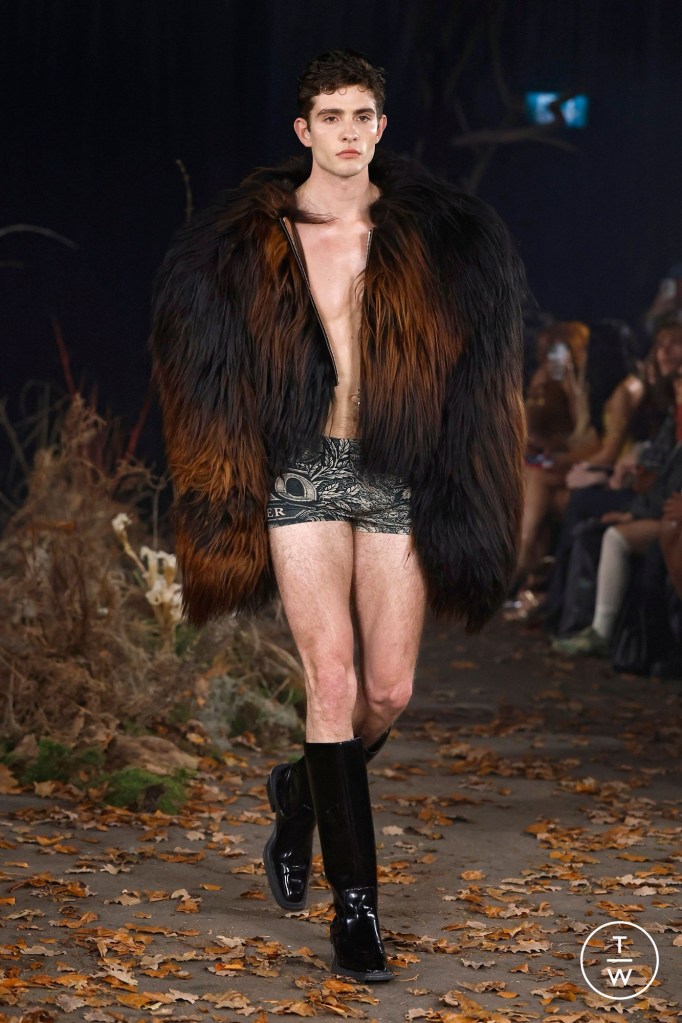
Moments of exposed skin interrupted the density of these protective layers, creating a compelling tension between vulnerability and control. Fur coats worn over minimal garments revealed the body rather than hiding it, demonstrating that protection and exposure can co-exist. The wanderer presented here was not retreating from the world but confronting it, guarded yet empowered. The balance between fragility and dominance echoed the psychological journey embedded within the collection, where clothing functioned as both shield and declaration.
As the show progressed, printed textiles and mythology references began to soften the story. Camouflage-like patterns and tapestry-inspired surfaces merged with the autumnal runway environment, blurring the boundary between individual and landscape. Long coats layered over subtly shimmering fabrics introduced movement and light, signaling the first shift in energy. The wanderer, once grounded and defensive, began to transform. No longer surviving but evolving.
Mid-way through the presentation, silhouettes grew increasingly expressive. Voluminous fur sleeves and sculptural outwear expanded outward, occupying space with confidence. The wearer appeared elevated, almost mythic. A rust-toned combination crowned with dramatic accessories carried a ritualistic presence, suggesting a figure stepping into power rather than hiding form uncertainty.
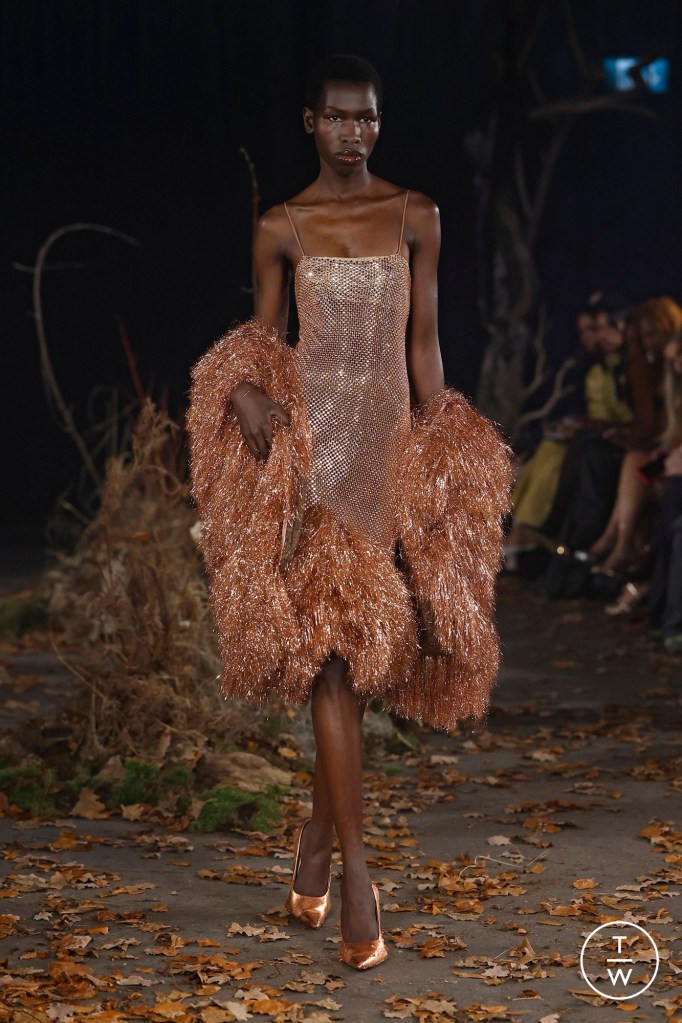
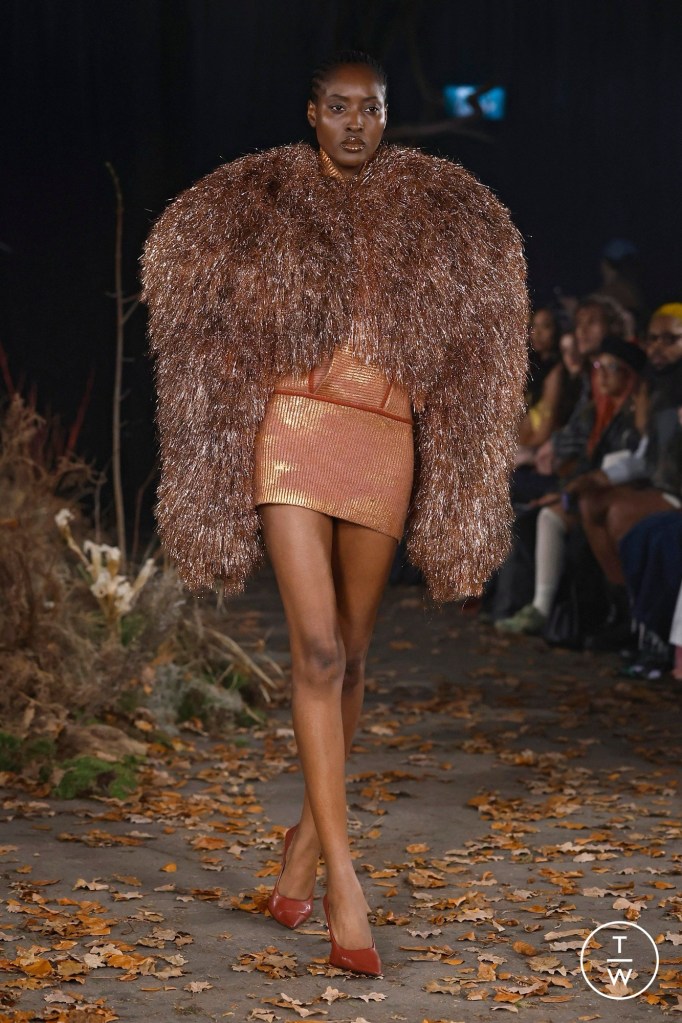
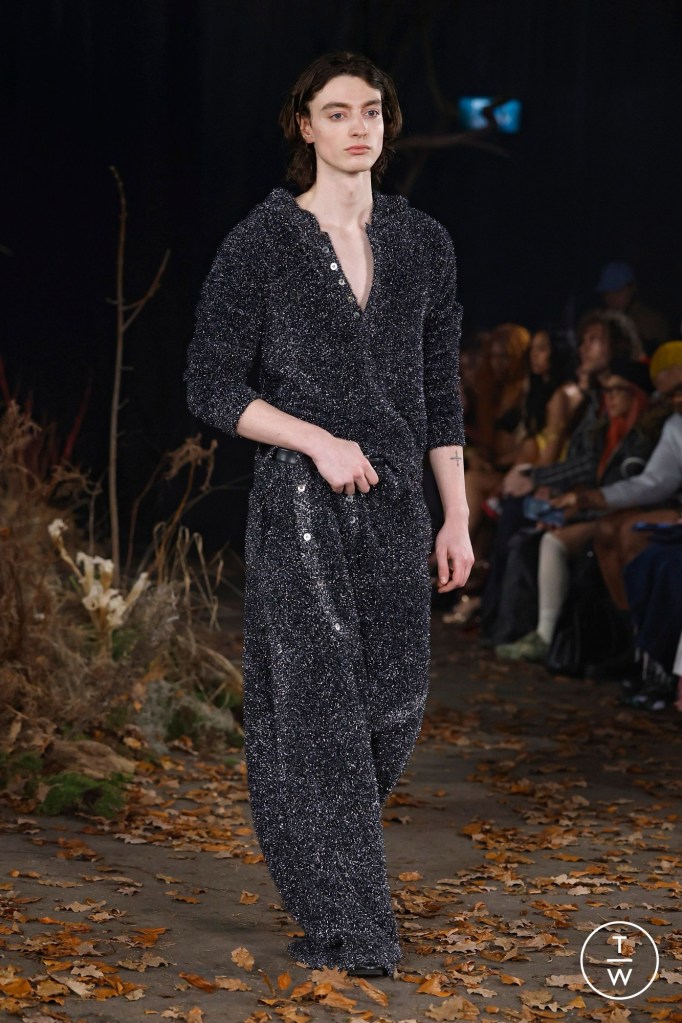
The transition into eveningwear marked a significant emotional turning point. Glittering dresses and softly shimmering surfaces introduced luminosity into the collection, as through the interior life of the wanderer had begun to emerge outwardly. These glowing garments felt less like decoration and more like a confession. The soul becoming visible, freed from earlier constraint. Light caught on movement, creating the impression of energy radiating from within, transforming the runway into a space of release and awakening.
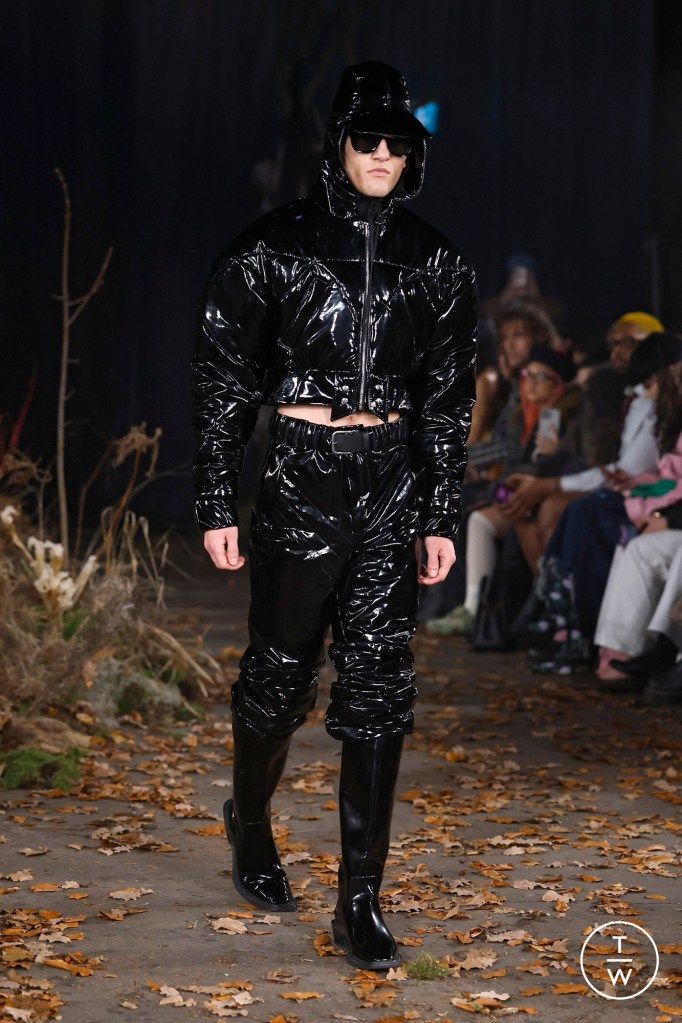
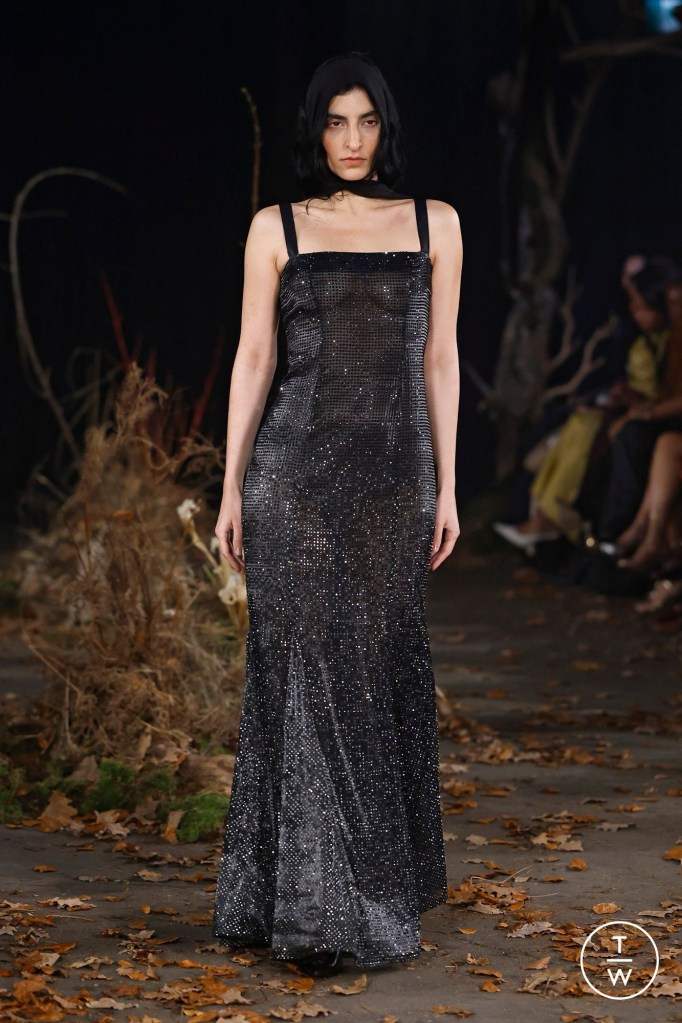
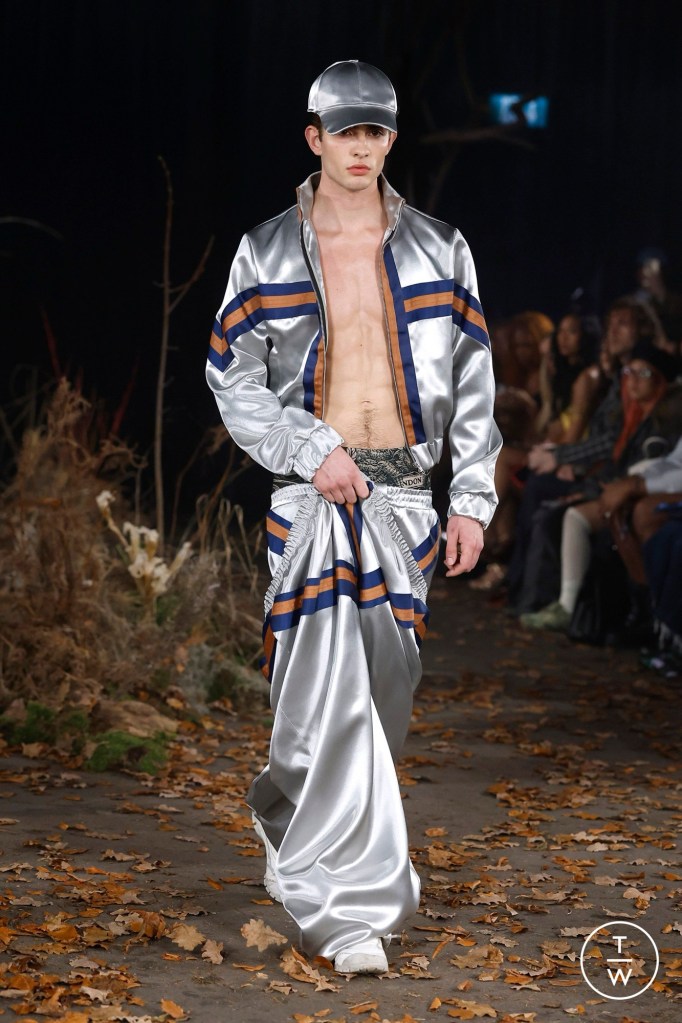
Silver looks intensified this transformation. The designers described these pieces as armor-like and on the runway, they appeared exactly so. Unlike traditional armor, however, these garments did not show defense alone, they communicated readiness and self-possession. The metallic sheen reflected light with every step, signaling a wanderer who had moved beyond protection.
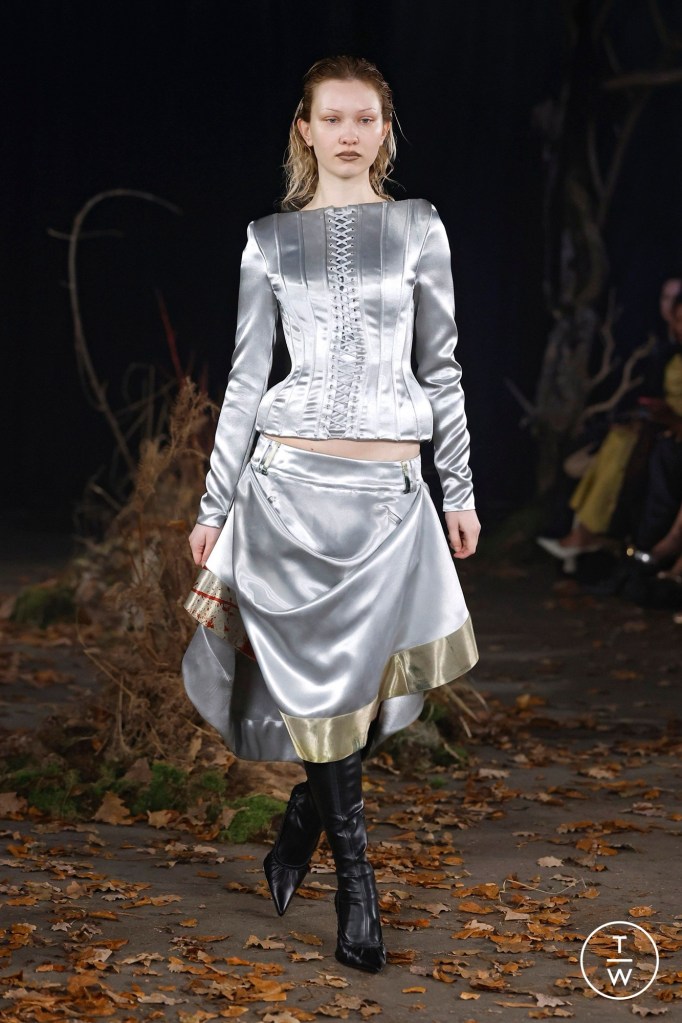
Corsetry reinforced this evolving symbolism. Structured bodices and sculpted silhouettes framed the torso like protective frameworks, echoing historical armor while maintaining sensuality. Rather than restricting movement, these pieces appeared to stabilize and secure the body, offering both physical and emotional strength. Protection here became intentional, chosen rather than forced. Further emphasizing the growing confidence within the collection’s story.
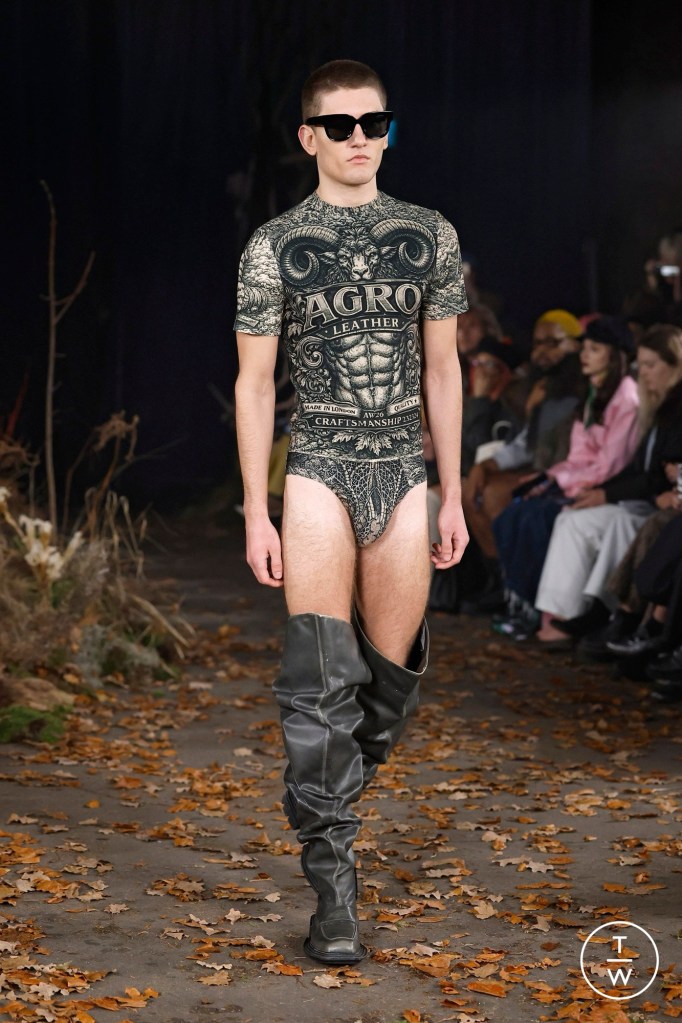
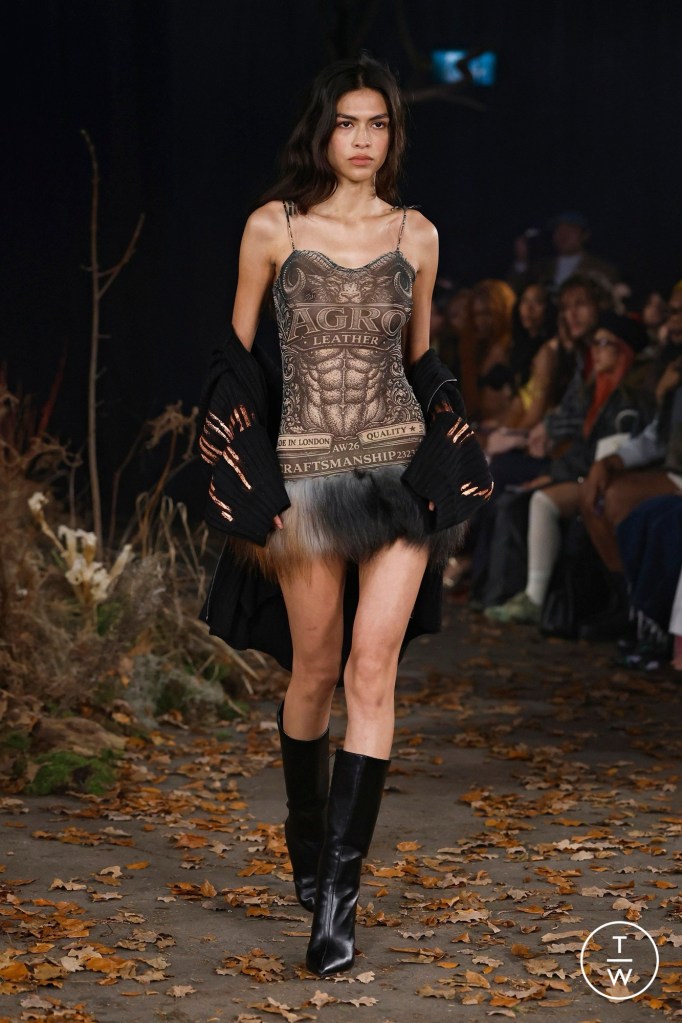
Throughout the latter half of the show, gender boundaries dissolved alongside emotional restraint. Bodysuits, tailoring and silhouettes coexisted without hierarchy, allowing identity to appear adaptable and self-defined. As textures lightened and shapes became more expressive, the wanderer transformed from a guarded traveler. Into a figure of autonomy and presence.
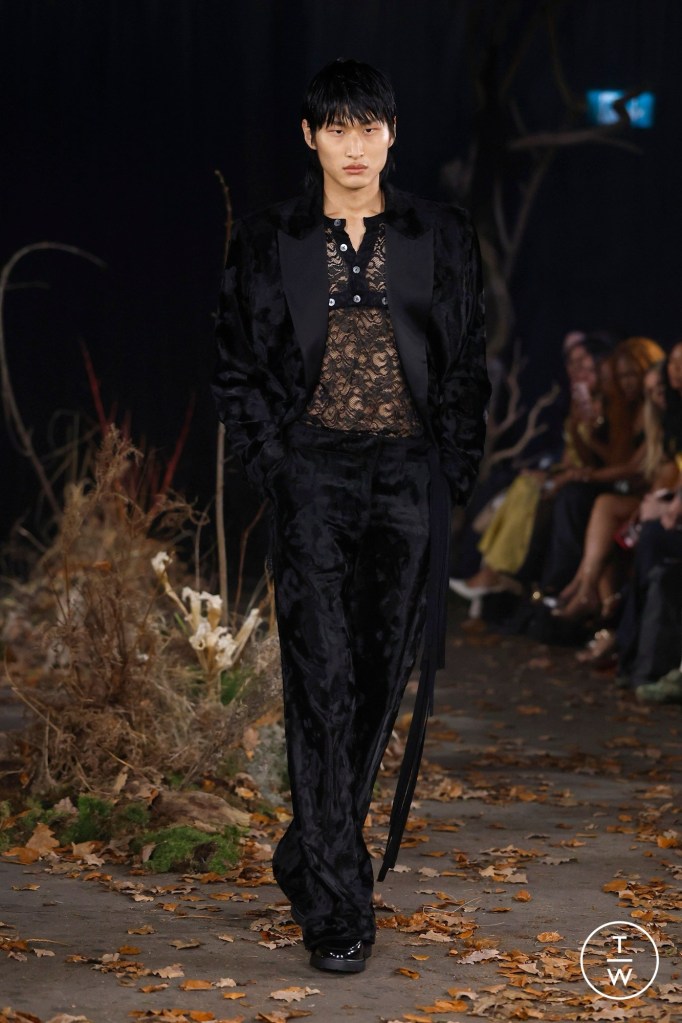
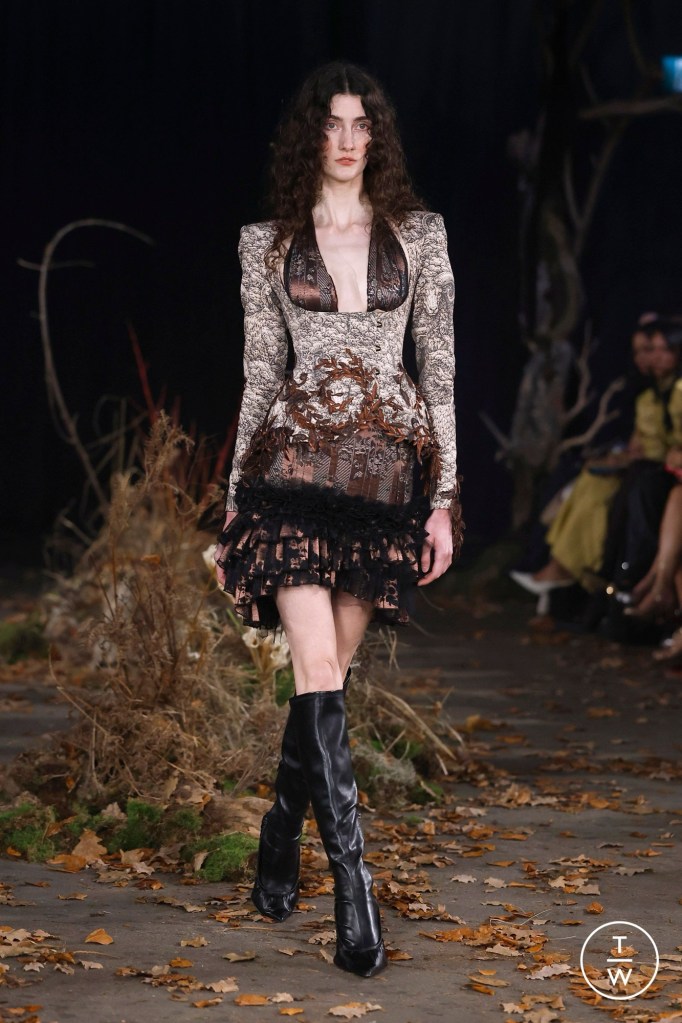
By the final sequence, the progression was unmistakable. What began as a story of protection and endurance evolved into one of relief and power. Glitter, metallic surfaces and sculptural forms suggested a persona no longer shaped only by the journey but strengthened by it. The show traced a gradual emotional ascent from grounding and survival toward freedom, radiance and self-possession, presenting the wanderer not as lost but as someone becoming fully realized.
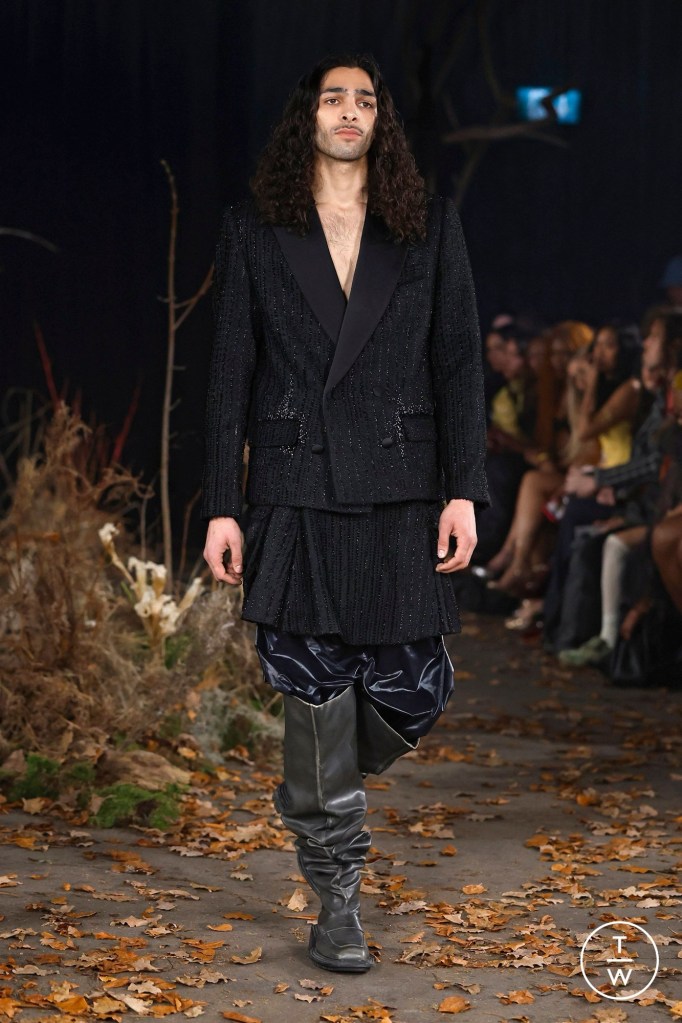
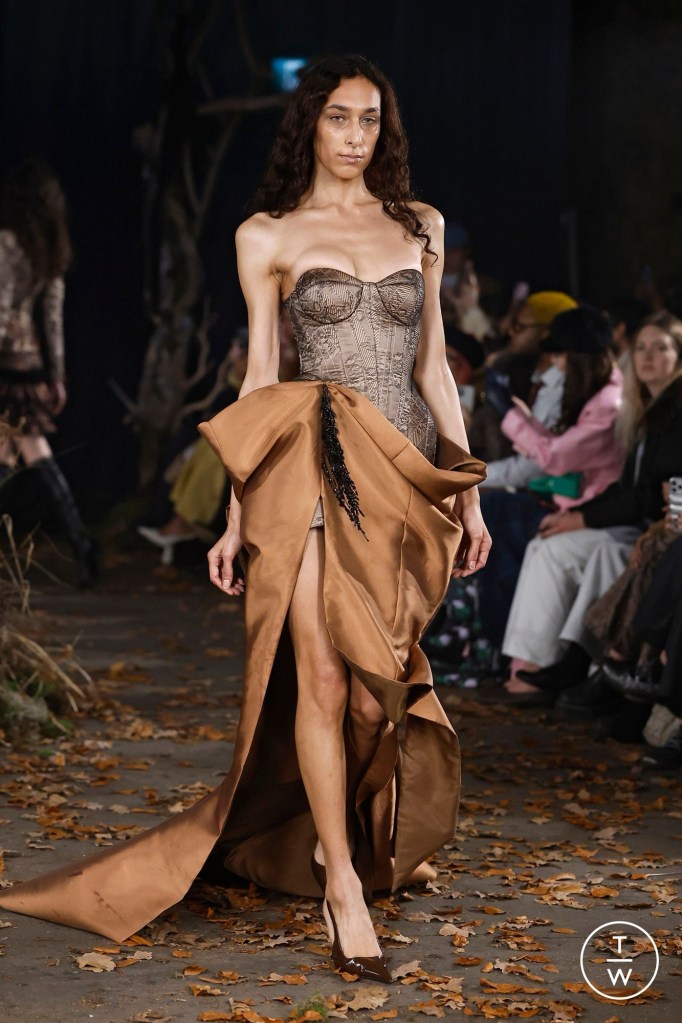
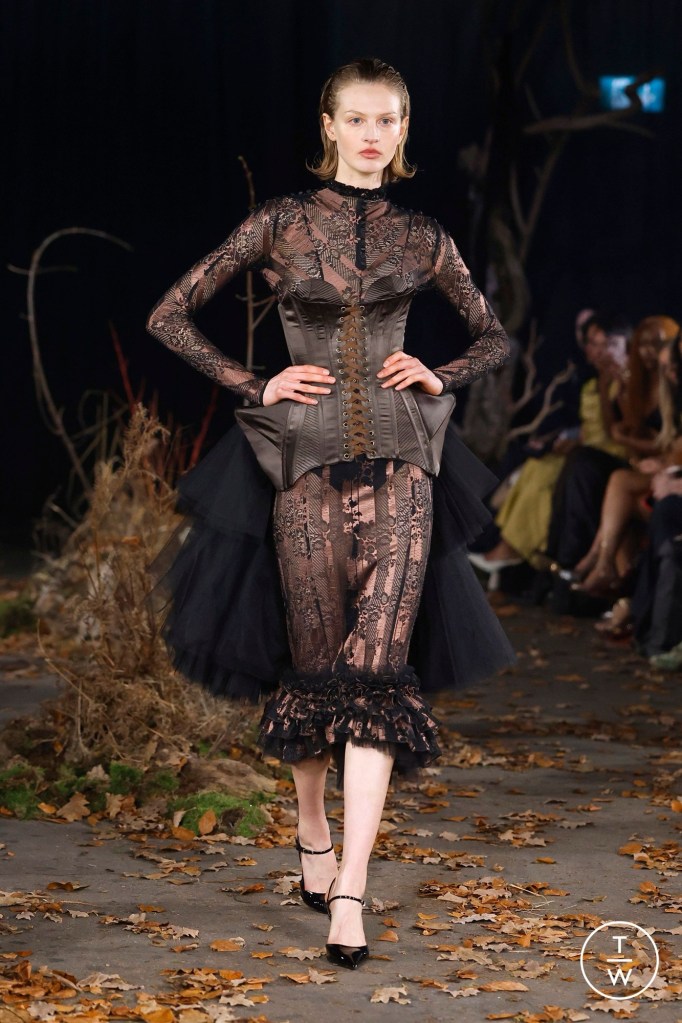
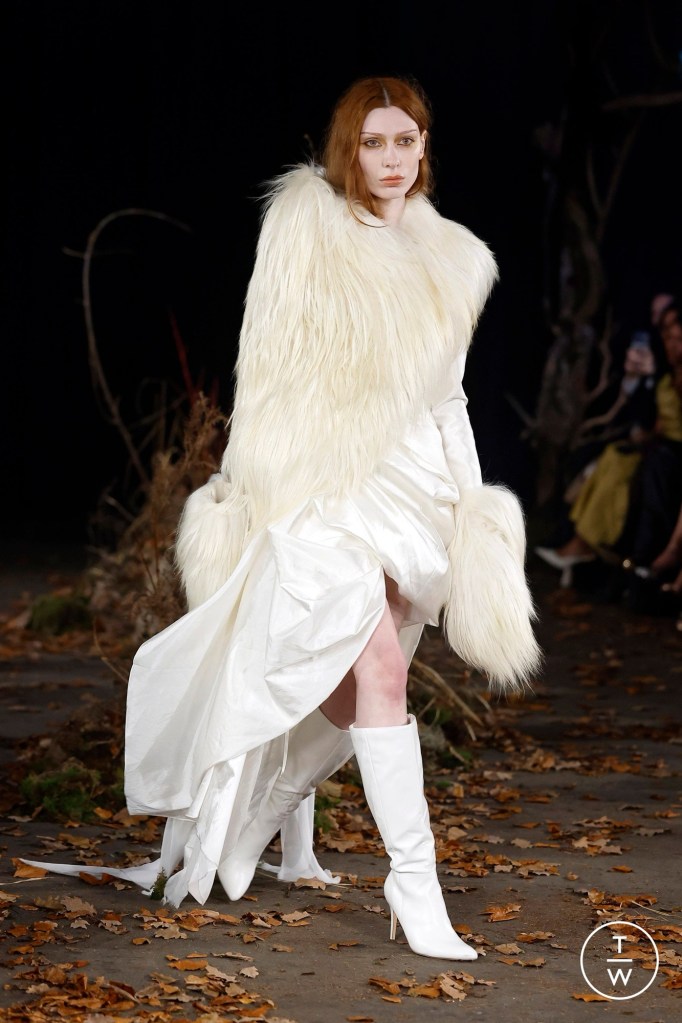
The styling by Douglas and performance elements of the show played a vital role in uniting the collection’s narrative. Makeup by Martina was kept intentionally restrained, allowing the models’ natural features to remain visible while creating an almost weathered, lived-in appearance. Skin appeared softly matte and untouched, as though shaped by environment rather than intention, reinforcing the idea of the wanderer as a figure marked by experience. Hair styling followed a similarly organic approach, avoiding excessive structure and instead indicating movement and spontaneity. This understated beauty direction prevented distraction from the garments while strengthening the emotional realism of the presentation.
Equally significant was the pace of the runway itself. Models walked slowly and deliberately, each step measured, creating a sense of contemplation rather than urgency. The slowed rhythm encouraged the audience to observe texture, silhouette, and transformation over time, allowing the narrative progression of the collection to unfold gradually. This controlled movement mirrored the psychological journey embedded within the designs, as if each figure carried the weight of travel and personal evolution.
Together, makeup, styling, and choreography transformed the show into something more than a display of clothing. They completed the world of The Wanderer, tying garments, atmosphere, and emotion into a cohesive experience where fashion functioned as storytelling in motion.
Creative Direction @wfblive
Production @_awastudio
Stylist @douglaswamiller
Public Relations @lobby.pr
–
Hair
Key Makeup Artist @martinaderosa_mua
Casting & Direction @bex3agency
Surface & Embroidery @rosiebrain.embroidery
Shoes @untitlab
Floristry & Scenic @sIxtr
Photos @tagwalk
 styleexplorermagazine.com
Leave a comment